The Challenge
What began as red, weeping eyes — a seemingly routine conjunctivitis — turned into a vision crisis for a woman from Mongolia. As her local doctors treated the infection, her eye pressure began to climb, and repeated medication changes resolved neither problem. Caught between an unhealed infection and dangerously high eye pressure, and losing sleep to anxiety, she and her husband crossed the border to Beijing United Family Hospital with the help of her insurer.
The Investigation
Dr. Wu Yi's first read pointed to steroid-induced glaucoma — long-term steroid drops can raise eye pressure. But one detail stood out: even after stopping all steroids and starting pressure-lowering drops, her eye pressure spiked again. Was there an underlying glaucoma? Dr. Wu set a stepwise plan — control the inflammation first, then investigate the glaucoma — and referred her to Dr. Wang Hua, an experienced glaucoma specialist, with the workup to follow once the eye had calmed.

The Diagnosis
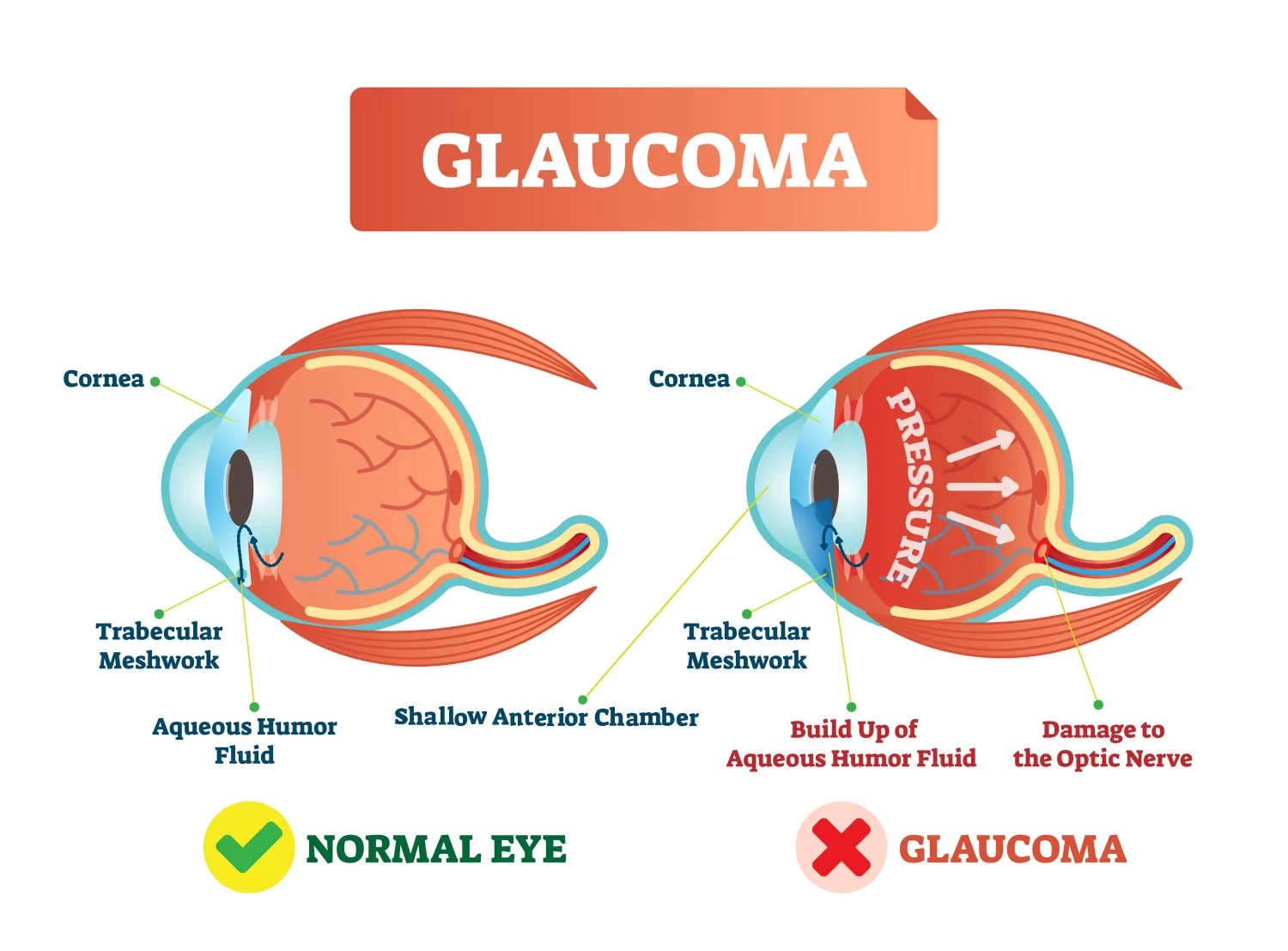
After a week of treatment the redness and discharge eased. On examination, Dr. Wang found a shallow anterior chamber, narrow drainage angle, and an enlarged optic-nerve cup — all pointing toward angle-closure glaucoma. Rather than risk an unreliable result, she waited until the conjunctivitis had fully resolved at three weeks, then completed a full assessment: visual fields, optic-nerve imaging, ultrasound biomicroscopy of the angle, and 24-hour eye-pressure monitoring. The diagnosis of angle-closure glaucoma was confirmed.
The Outcome
Dr. Wang performed bilateral laser peripheral iridotomy — a minimally invasive treatment that controlled the pressure fluctuations and, more importantly, sharply reduced the risk of a future acute angle-closure attack. The team had moved past the surface "red eye" to address the real threat to her sight. "We found that medical treatment is extremely good," the couple said of their journey.